
Isuzu Diesel Generator
Renewable energy harnessed from solar power offers a sustainable and eco-friendly solution to meet the worlds.
Home Isuzu Diesel Generator
Isuzu Diesel Generator
Home » Isuzu Diesel Generator
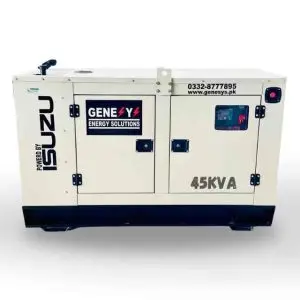
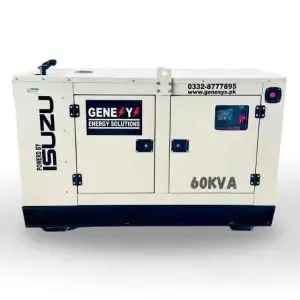
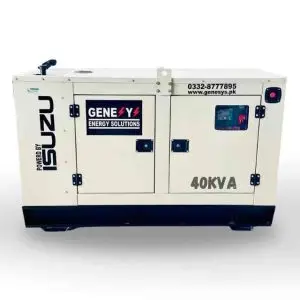
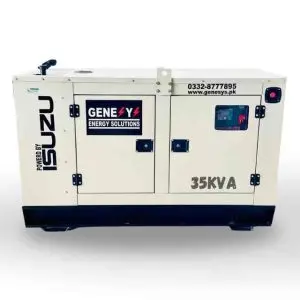
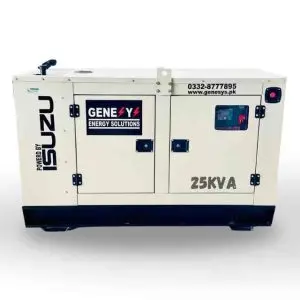
Isuzu Diesel Generators in Pakistan
An Isuzu diesel generator (also called an Isuzu diesel genset or Isuzu DG set) is a reliable backup power option for homes, businesses, and industrial sites across Pakistan—especially where load shedding, voltage fluctuations, or fuel planning are part of daily operations.
This page helps you understand which kVA size fits your needs, what “silent” or soundproof canopy really means, and why the Isuzu generator rate in Pakistan can vary by configuration. If you’re comparing multiple brands, you can also explore our broader diesel generator range for context.
Where an Isuzu diesel genset fits
Isuzu diesel gensets are commonly selected for standby (backup) power, prime use in controlled hours, and critical loads where you can’t afford downtime—such as offices, clinics, retail stores, workshops, and production floors.
In Pakistan, a practical approach is to treat the generator as part of a system: the right sizing, safe changeover, good ventilation, and correct wiring matter as much as the engine itself. That’s how you get smoother starts, steadier output, and longer service life.
Who typically chooses Isuzu DG sets in Pakistan
Buyers usually fall into three groups: (1) homes that want stable backup for essential appliances, (2) small and medium businesses that need uninterrupted operations during outages, and (3) industrial users running motors, pumps, compressors, or mixed loads that demand stronger starting performance.
When diesel makes sense vs alternatives
Diesel backup is often the most straightforward choice when you need dependable power quickly and for longer outage windows. It can also pair well with solar/inverter systems when you want lower generator runtime and a cleaner backup strategy.
Choose diesel-first if outages are frequent/long and you need predictable backup.
Choose hybrid (solar + batteries + generator) if you want quieter nights and reduced generator hours.
Choose inverter-only if your load is light and you can tolerate limited runtime.
Choose the Right Isuzu Generator Size (kVA Guide)
A quick, practical sizing method
Start with a simple load list: write down what must run during an outage (lights, fans, AC, fridge, pumps, office equipment, etc.). Add up the running watts, then account for starting surge—especially for motors, pumps, and non-inverter ACs.
After that, convert to kVA with a safety margin. In real Pakistani conditions—mixed loads, voltage swings, and expansion over time—choosing a generator too close to the edge is a common cause of tripping, low voltage under load, and higher wear.
Single-phase vs three-phase in Pakistan
Single-phase is typical for many homes and small shops. Three-phase is common in factories, larger commercial sites, and places with three-phase machinery. The key is not only the connection type, but how your loads are distributed and what your main supply is.
Example: a small workshop in Karachi running a three-phase motor cannot be “fixed” with a single-phase generator, even if the kVA seems similar on paper. Matching phase requirements correctly avoids imbalance issues and protects equipment.
Popular small sizes (10–30 kVA) and where they fit
Below is a practical starting point for common sizes people search for. Final sizing depends on your actual connected load, motor starting, and whether you plan to run ACs, pumps, or machinery together.
10 kVA Isuzu diesel generator: Typically suits essential home backup (lights, fans, fridge, TV, small appliances) with careful load management.
15 kVA Isuzu diesel generator: Often chosen for larger homes or small offices where you want more headroom for mixed loads.
20 kVA Isuzu diesel generator: A common fit for small clinics, offices, or shops with multiple circuits and steadier day-to-day demand.
25 kVA Isuzu diesel generator: Popular for small workshops/retail where you may run more equipment together (with surge considered).
30 kVA Isuzu diesel generator: A practical step-up for SMEs needing stronger backup capacity and better handling of mixed loads.
Mid to large sizes (50–100 kVA) and where they fit
If your site has heavier loads (multiple ACs, refrigeration, lifts, pumps, compressors, or workshop machinery), moving up to 50 kVA and above often gives you the stability and surge-handling that smaller sets struggle with—especially during simultaneous starts.
In Pakistan, these sizes are commonly used in commercial buildings, clinics, factories, and sites where downtime directly impacts sales, safety, or production output.
50 kVA Isuzu diesel generator: Often selected for commercial backup (multi-floor offices, restaurants, small production areas) where you have mixed loads and want a safer operating margin.
60 kVA Isuzu diesel generator: A popular industrial “sweet spot” for stronger motor starting and steadier performance on demanding sites. If you’re exploring this size, you can view a reference model here: Isuzu diesel generator models (60 kVA).
100 kVA Isuzu diesel generator: Typically suits larger facilities (bigger workshops, factories, large commercial buildings, and critical operations) where multiple sections of the site must stay powered without constant load juggling.
Pakistan example: A Korangi/Karachi industrial unit running motors and compressed-air tools may “technically” run on a smaller kVA, but frequent start surges can cause voltage dips and nuisance trips. In these cases, upsizing is often the cheaper long-term decision than stressing an undersized generator.
Isuzu Diesel Generator Price in Pakistan (What Affects the Rate)
When people search “Isuzu diesel generator price in Pakistan” or “Isuzu generator rate in Pakistan,” the biggest confusion is expecting one fixed number. In reality, the final price depends on your required kVA, configuration, installation scope, and add-ons like silent enclosure and automatic changeover.
Why the Isuzu generator rate varies
The same kVA can differ in rate due to alternator brand/spec, controller type, canopy build, electrical panel requirements, and whether the quotation includes delivery, commissioning, and site materials.
That’s why two “30 kVA” offers can look similar at a glance but perform very differently in noise control, safety, and load stability.
kVA capacity: Higher kVA generally increases cost due to engine/alternator sizing and heavier build.
Silent vs open type: Silent Isuzu diesel generator options include enclosure/canopy work that changes overall pricing.
Controller & protections: Digital control, safety trips, metering, and monitoring features can vary.
ATS/AMF readiness: If you need auto-start/auto-transfer, panel sizing and parts affect cost (details below).
Installation scope: Cabling, breakers, earthing, exhaust routing, and base/plinth work can be included or excluded.
Duty requirement: Standby-only vs longer daily runtimes can influence spec recommendations (without assuming “one spec fits all”).
Generator “rate” vs delivered/installed cost
Some quotes describe only the generator set, while others include delivery, installation, and commissioning. For many buyers in Pakistan, the delivered/installed cost is what matters—because correct wiring, earthing, ventilation, and safe changeover are essential for stable performance.
If you are comparing offers, ask each supplier to confirm what’s included (generator only vs turnkey). This avoids surprises later, especially for larger kVA setups that require heavier cabling and proper protections.
How to get an accurate quote quickly
To get the right Isuzu diesel genset recommendation and a realistic price, share these details upfront:
Location (city) and site type (home, shop, factory)
Single-phase or three-phase requirement
Load list (must-run items) and motor/AC details (inverter vs non-inverter)
Noise requirement (silent/soundproof canopy needed or not)
Whether you need ATS/AMF for automatic backup
Silent Isuzu Diesel Generator & Soundproof Canopy Options
Many buyers specifically ask for a silent Isuzu diesel generator, but “silent” usually means the generator is supplied with a sound-attenuating enclosure (canopy), not that it makes zero noise. Your actual noise experience depends on placement, exhaust routing, airflow, and how hard the generator is working under load.
In Pakistan, silent/soundproof configurations are especially important in residential areas, mixed-use commercial locations, and any site where neighbors, customers, or staff are close to the generator room or yard.
What “silent” really means in day-to-day use
A silent set is designed to reduce noise and protect the generator from dust and weather. However, if the canopy blocks airflow or the exhaust is routed poorly, heat builds up and performance can suffer—so silence should never come at the expense of ventilation.
Also, the same generator can sound very different depending on where it sits (open yard vs tight alley vs indoor room). For example, a generator placed between walls in a Karachi lane can “echo” more than one placed in an open, ventilated area with proper clearance.
Soundproof canopy features that matter
A good soundproof canopy Isuzu generator setup is not just thick metal. The practical differences come from airflow design, internal acoustic lining, vibration isolation, and service access that allows proper maintenance without removing half the enclosure.
For Pakistan’s dusty environments and hot summers, it’s important that the canopy supports stable cooling under load. If cooling is compromised, you may see higher operating temperatures and more frequent shutdown risks—especially during longer outages.
Airflow path: Proper inlet/outlet design so the set breathes easily.
Service access: Doors/panels for filters, oil checks, and routine inspection.
Vibration control: Mounting that reduces structure-borne noise into floors/walls.
Weather/dust protection: Useful for outdoor installs and industrial zones.
Placement tips for Pakistani neighborhoods
Even the best canopy struggles if the generator is installed in a corner with poor airflow or the exhaust points toward a neighbor’s window. A practical setup focuses on safe exhaust discharge, adequate clearance, and a base that reduces vibration transfer.
Example: For a shop in a busy market area, placing the generator away from the customer entrance, routing exhaust upward, and keeping clear airflow space can make the site feel significantly calmer—without relying on unrealistic “fully silent” expectations.
Isuzu Generator ATS / AMF Panel (Automatic Backup)
An Isuzu generator ATS / AMF panel automates backup power: when utility supply fails, the panel signals the generator to start, then safely transfers the load. When grid power returns and stabilizes, it transfers back and shuts the generator down after a cool-down period (depending on configuration).
This is a common upgrade for businesses in Pakistan because it reduces downtime, avoids manual switching errors, and keeps operations running even if staff are not present at the moment of an outage.
ATS vs AMF: what you should know
Terminology varies by market and supplier. In practical terms, people use ATS/AMF interchangeably to describe an automatic changeover system that handles start/stop plus load transfer safely.
What matters most is not the label but the design: correct amp rating, protection devices, safe interlocking, proper sensing of voltage/frequency, and wiring that matches your single-phase or three-phase requirement.
Who should add ATS/AMF in Pakistan
If your site loses money, safety, or service quality during power cuts, automatic backup is worth considering. Clinics, offices, restaurants, and production sites often benefit because even a few minutes of downtime can be expensive or operationally disruptive.
Example: a small clinic may need uninterrupted power for lighting, fans, computers, and basic equipment. An automatic setup helps ensure power returns quickly without relying on someone to start the generator and switch loads manually.
Shops and offices that must stay open during outages
Clinics and labs where power continuity affects service
Sites with frequent outages or unattended hours
What changes ATS/AMF panel cost and complexity
The “panel price” depends on the electrical side of your site as much as the generator. Higher current (amps), three-phase distribution, required protections, enclosure quality, and monitoring features all influence the final quotation.
It also matters whether you need a clean, fully integrated installation (recommended for safety) versus a basic switching arrangement. For an accurate quote, suppliers typically need your main breaker size, phase requirement, and whether you want metering/alerts.
Typical Applications in Pakistan
Residential backup
For homes, the goal is usually to run essentials smoothly: lighting, fans, refrigeration, and a few priority circuits. If you plan to run ACs or pumps, sizing and surge planning becomes more important, and you may need more headroom than expected.
A practical approach is to define “must-run” vs “nice-to-have” loads. This keeps the generator operating in a healthier range, reduces nuisance trips, and helps you manage fuel during longer outage periods.
Commercial use (shops, offices, restaurants)
Commercial sites often have mixed loads—lighting, signage, POS systems, refrigeration, and sometimes multiple ACs. In Pakistan, these businesses frequently choose silent/soundproof options because customers and neighbors are nearby.
Automatic changeover (ATS/AMF) can be especially useful here because outages can happen during peak hours. Quick, consistent restoration protects revenue and reduces the chance of staff making unsafe switching decisions under pressure.
Industrial & heavy equipment support
Workshops and industrial sites may run motors, pumps, compressors, welders, and machinery that demand high starting current. This is where correct kVA selection, three-phase balance, and robust protections become critical.
In Pakistan’s industrial zones, dust and heat are real stress factors. A well-planned installation (airflow, filtration, and maintenance access) often delivers more reliability than simply “buying bigger” without site planning.
Construction and temporary power
For construction or temporary setups, you typically need rugged placement, safe cable routing, and practical load planning. Duty cycle expectations should be discussed clearly so the generator is configured appropriately for how many hours it will run daily.
It’s also wise to plan for safe earthing and weather protection—especially during monsoon periods or on open sites where water and dust exposure can become a problem quickly.
Installation, Commissioning & Maintenance (Reliability in Real Conditions)
Site prep checklist
A well-installed Isuzu diesel generator performs more consistently and lasts longer—especially in Pakistan’s dust, heat, and uneven utility conditions. Before installation, plan for ventilation, safe exhaust discharge, and a stable base.
Good site prep also makes future servicing easier. If filters, battery, and access panels are hard to reach, maintenance gets delayed—and that’s when small issues turn into outages.
Base/plinth: Level, stable, and designed to reduce vibration transfer.
Ventilation: Clear airflow path; avoid tight corners that trap heat.
Exhaust routing: Direct fumes away from people, entrances, and windows.
Weather protection: Especially for outdoor installs (rain, dust, direct sun).
Electrical safety essentials
Generators involve high current and can be dangerous if installed incorrectly. Always use a qualified electrician/technician for wiring, earthing, and changeover arrangements.
For safe operation, focus on correct cable sizing, protective devices (breakers), proper earthing, and a changeover method that prevents back-feeding into the grid. If you’re adding automatic transfer, the ATS/AMF panel must be sized to your site’s electrical load and supply type.
Maintenance basics (what to check and why)
Service intervals depend on usage hours, load percentage, environment, and the specific model configuration—so the best reference is the service manual and your supplier’s commissioning notes. Still, a simple routine helps prevent most avoidable problems.
In Pakistan, dusty air and long outage windows mean filters and cooling checks matter more than many buyers expect. Keeping a logbook (hours run, fuel top-ups, service dates) also makes troubleshooting faster.
Weekly checks: Oil level, coolant level, visible leaks, battery condition, unusual vibration/noise.
Monthly checks: Air filter condition, belt condition, connections/terminals, test run under load if practical.
Seasonal checks: Cooling performance during peak summer, canopy ventilation, exhaust integrity.
Fuel & runtime planning (without guesswork)
Diesel consumption changes significantly with load and operating conditions. Running a generator very lightly loaded can be inefficient, while overloading can trigger trips and stress the engine/alternator. The goal is to size the generator so your typical backup load sits in a healthy operating range.
For sites with long daily runtimes, it’s smart to plan fuel storage and refilling schedules around real usage hours, plus include contingency for longer-than-usual outages.
Why Buy Isuzu Diesel Generators from Genesys
Practical sizing support (so you don’t overbuy or underbuy)
Many generator issues start with sizing mistakes—either the generator is undersized (trips, voltage dips) or oversized (inefficient operation). Genesys can help you shortlist the right kVA based on your load list, phase requirement, motor starting needs, and whether you’re aiming for essential-only backup or broader coverage.
If you’d like to understand our background and approach, you can also view the Genesys About page.
Support that matches Pakistan’s operating realities
In Pakistan, reliability isn’t only about the brand name—it’s also about correct installation, clear operating guidance, and timely maintenance. A locally grounded support process helps you reduce breakdown risk during peak summer and long outage periods.
When you request a quote, it helps to share your site location, phase, load details, and whether you need a silent enclosure or ATS/AMF automation. That keeps recommendations accurate and avoids mismatched quotations.
FAQs
The Isuzu diesel generator price in Pakistan varies by kVA size, configuration (open vs silent), controller type, and whether the quote includes delivery, installation, and commissioning. Share your load and site details for an accurate quotation.
Two gensets with the same kVA rating can differ in alternator spec, enclosure build quality, protection devices, and included services. Always compare “what’s included” (generator-only vs installed/commissioned) before deciding.
If your load is close to the limit or includes surge-heavy equipment (ACs, pumps, compressors), 30 kVA often provides more breathing room. The right answer depends on your actual load list and start-up surges.
kVA is “apparent power,” while kW is “real usable power.” The conversion depends on power factor. For practical buying decisions, it’s best to size using your real load needs and then choose a generator with an appropriate margin.
If neighbors are close, or the generator sits near bedrooms or a boundary wall, a silent/soundproof canopy can significantly improve comfort. Placement, exhaust routing, and ventilation also affect how loud it feels.
It’s a generator supplied with an enclosure designed to reduce noise and provide weather/dust protection. Canopy airflow design and service access are key—poor ventilation can cause heat issues during long outages
Yes, but the generator must be sized correctly for the type and number of ACs. Non-inverter ACs and compressors have higher starting surges, which often require more kVA headroom.
Maintenance frequency depends on run hours, load, and environment. As a rule, follow the manufacturer’s service schedule and keep up with routine checks (oil/coolant/battery/filters) to prevent avoidable failures.